 Skip to content

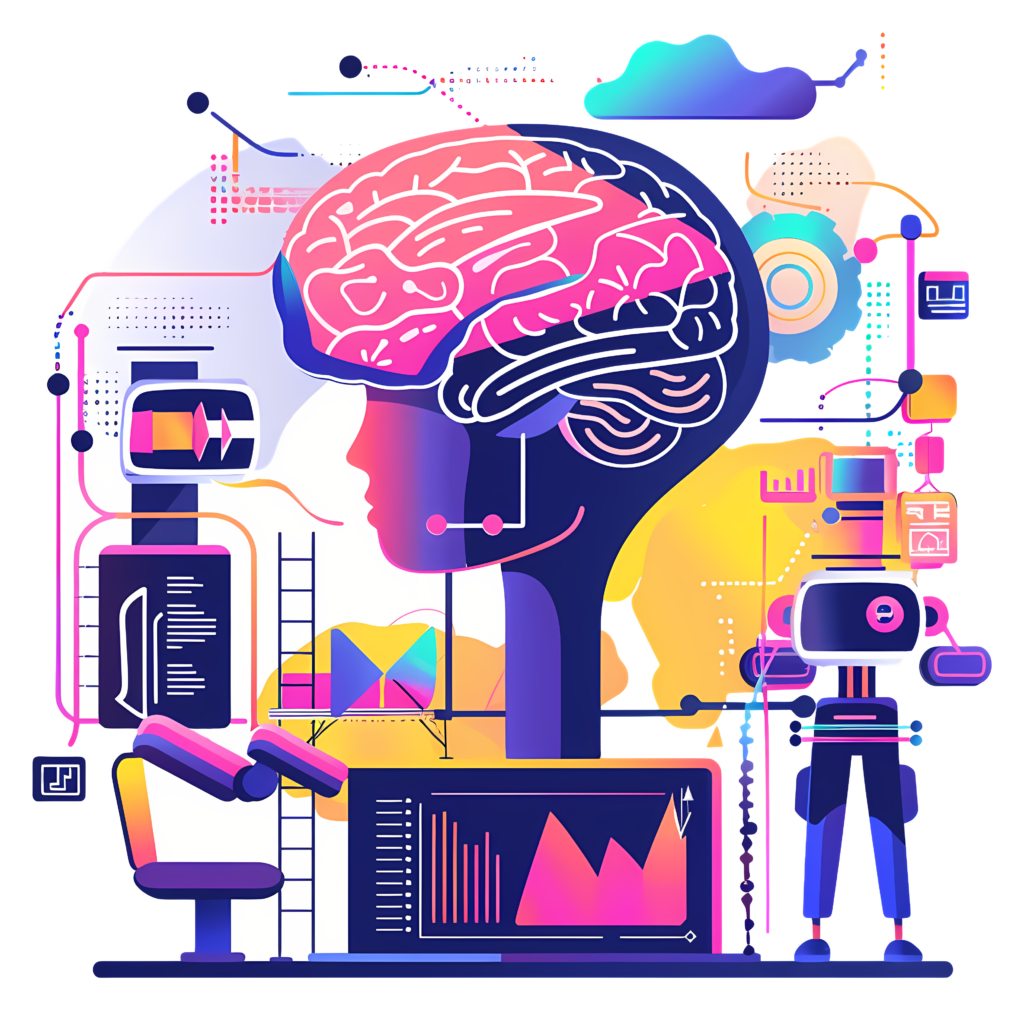
For large enterprises, the promise of Generative AI (GenAI) and Agentic AI—where autonomous AI systems execute complex tasks—is clear: unprecedented efficiency, innovation, and competitive edge. However, scaling these technologies beyond isolated pilots requires more than just models; it demands a fundamental shift in operational philosophy. The goal is no longer to build a single application, but to construct an “AI Factory”—a streamlined, scalable infrastructure that can reliably produce, deploy, and manage intelligent agents at scale.
The journey from proof-of-concept to production at scale is where most organizations stumble. Success hinges not on the latest model, but on a robust, strategic infrastructure foundation. This is where the core disciplines of data science, data engineering, and enterprise architecture converge.
From Data Warehouse to AI Foundry: Evolving the Foundation
Many organizations already possess the crucial first component: a trusted, centralized data repository. As SDi’s experience shows, a modern Data Warehouse is far from obsolete; it is the essential “source of truth” that feeds the AI Factory. For generative and agentic AI, this foundation must evolve:
- Governed Data Products: Move beyond raw data lakes to curated, high-quality, and reliably updated “data products.” These are the validated inputs that ensure your AI agents operate on accurate information, a critical service in SDi’s data consultancy.
- Unified Data Access: The infrastructure must provide seamless, secure access to these data products for both training pipelines and live agentic systems, breaking down the silos that hinder traditional analytics.
- Metadata & Lineage: Comprehensive tracking of data origin, transformation, and usage is non-negotiable for auditability, model debugging, and compliance in regulated industries.
The Core Pillars of the AI Factory Infrastructure
Building this factory requires intentional design across several layers:
- The Compute Layer: Specialized and Scalable
The shift from predictive ML to GenAI and agentic workloads changes compute demands. Infrastructure must support:- Hybrid GPU Clusters: For training and running large models, with orchestration that can burst to cloud resources while keeping sensitive core workloads on-premise.
- Agent-Optimized Runtime: Environments built for hosting and orchestrating multiple, interacting AI agents with low latency and high reliability.
- Cost Governance: Transparent systems to track and optimize the significant compute spend associated with AI at scale.
- The MLOps Evolution: From Models to Agents
Traditional MLOps focused on model versioning and deployment. The AI Factory requires AgentOps—a framework for the full lifecycle of autonomous AI components.- Agent Registry & Orchestration: A system to catalog, version, and choreograph how specialized agents (e.g., a research agent, a summarization agent, a validation agent) collaborate on tasks.
- Continuous Evaluation: Automated testing against not just accuracy, but also safety, bias, and operational reliability benchmarks in simulated environments.
- Observability & Monitoring: Real-time monitoring of agent decisions, tool usage, and interaction chains to ensure performance and alignment with business goals.
- The Integration Fabric: Connecting to Enterprise Core
An AI agent is only as valuable as its ability to act. The factory needs a secure integration layer that allows agents to interact with core business systems—ERP, CRM, supply chain logs—through APIs and secure workflows. This turns insights into automated actions, closing the loop from intelligence to execution.
The Strategic Imperative: Partnering for Long-Term Capability
Building an AI Factory is not a one-off project. It is a strategic capability that evolves, as highlighted by SDi’s model of building long-term client relationships. The most successful organizations will partner with experts who provide ongoing strategic guidance to:
- Prioritize High-Impact Use Cases: Applying the factory blueprint to business areas with clear ROI.
- Navigate Technology Evolution: Adapting the infrastructure to new hardware breakthroughs and algorithmic advances.
- Institute AI Governance: Embedding ethical principles, security, and compliance into the very fabric of the factory’s operations.
Conclusion
The future belongs to organizations that can industrialize their AI potential. Generative and Agentic AI offer not just tools, but a new operational layer for the enterprise. Building the AI Factory—the resilient, scalable infrastructure that powers this layer—is the critical strategic project for the coming years. It requires a shift from project-based thinking to platform-based engineering, turning sporadic innovation into a continuous, reliable flow of intelligent automation.
Ready to architect your AI Factory? Smart Data Institute specializes in building the strategic data and infrastructure foundations that allow large enterprises to scale AI with confidence. Contact our specialists to begin planning your transition from pilots to production at scale.
Keywords: AI Factory, Generative AI, Agentic AI, Enterprise AI Infrastructure, MLOps, Data Warehouse, AI Strategy, Large Organization AI, AI Scalability, Smart Data Institute.

