 Skip to content

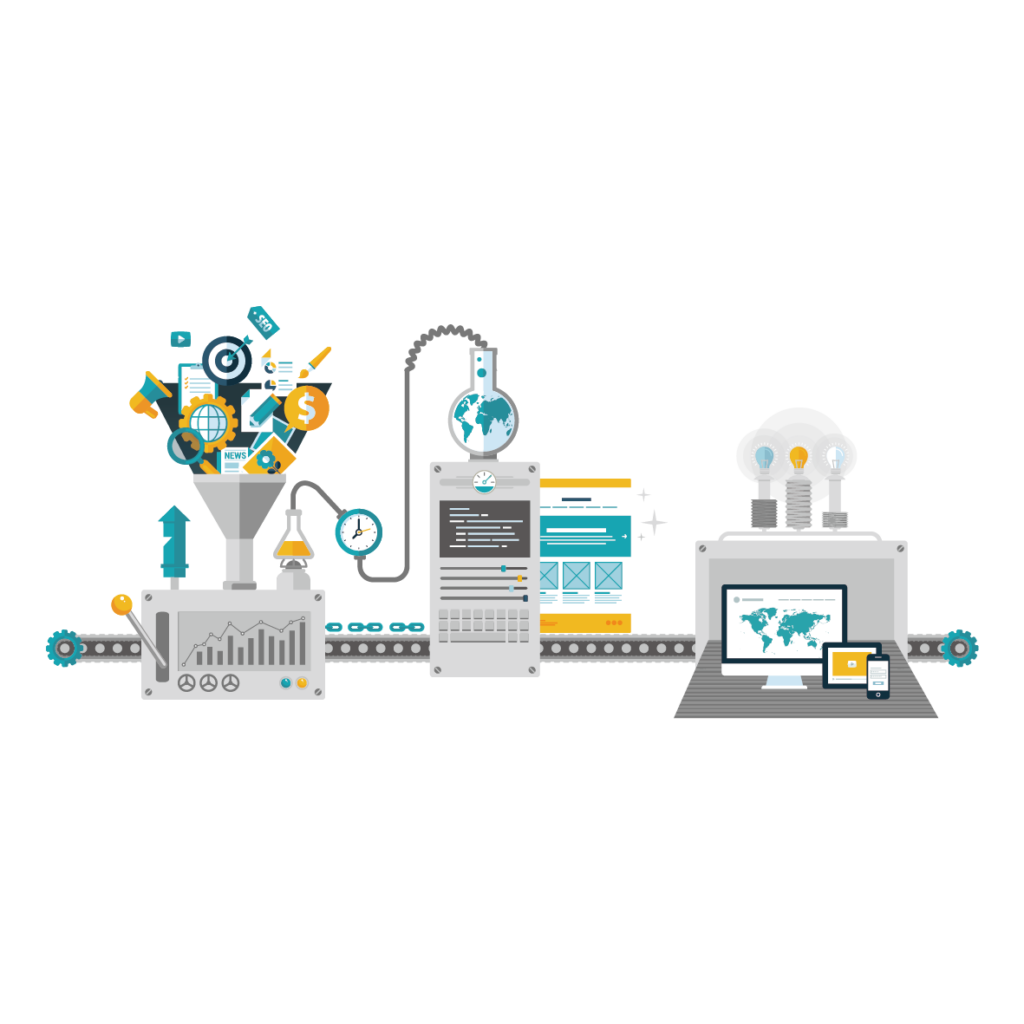
The global shortage of expert data scientists has created a critical bottleneck for organizations striving to become data-driven. While the demand for deep insights grows exponentially, the supply of PhD-level talent capable of building complex machine learning models remains limited. This gap is no longer just a hiring challenge; it’s a strategic barrier to growth.
Fortunately, a powerful paradigm shift is turning this problem on its head. The convergence of Augmented Analytics and Automated Machine Learning (AutoML) is systematically democratizing advanced data science. These technologies are not replacing data scientists but are amplifying their impact, enabling domain experts—analysts, marketers, supply chain managers, and more—to generate sophisticated insights and build predictive models. This transition is transforming large teams from passive consumers of data reports to active creators of data intelligence.
The Democratization Stack: How These Tools Empower Teams
Democratization doesn’t mean “anyone can do anything.” It means creating a structured, governed pathway for subject matter experts to leverage advanced analytics safely and effectively.
- Augmented Analytics uses AI and natural language processing (NLP) to enhance the data analytics cycle. It automates data insight generation, explanation, and narrative. Think of it as an AI-powered co-pilot for business intelligence.
- For the Business Analyst: Instead of manually building a dozen dashboard variations to find a sales trend, they can ask in plain language: “What were the top three causes for regional sales decline last quarter?” The system automatically analyzes the data, generates visualizations, and provides a narrative summary.
- Key Tools: Features like natural language querying, automated insight detection, and smart data preparation are now embedded in leading BI platforms (e.g., Tableau, Power BI, ThoughtSpot).
- Automated Machine Learning (AutoML) automates the end-to-end process of applying machine learning to real-world problems. It handles complex tasks like feature engineering, algorithm selection, and hyperparameter tuning.
- For the Marketing Manager: With a guided AutoML interface, they can upload historical campaign data and customer attributes to build a model predicting customer lifetime value or churn risk—without writing a single line of Python code.
- Key Platforms: Cloud services (Google Cloud AutoML, Azure Automated ML) and open-source libraries (H2O.ai, DataRobot’s platform) provide user-friendly interfaces that abstract away the underlying complexity.
The Symbiosis: How Augmented Analytics and AutoML Work Together
The true power is realized when these capabilities are integrated into a seamless workflow within a large team’s operating environment.
- Discovery via Augmentation: A finance specialist uses an augmented analytics tool to explore quarterly data. The AI surfaces an unexpected, statistically significant correlation between supplier delivery delays and increased product defects.
- Investigation via AutoML: Intrigued, the specialist uses a governed AutoML platform to investigate further. They use the point-and-click interface to build a predictive model that quantifies the risk of defects based on supplier performance metrics.
- Operationalization with Oversight: The validated model is passed to the central data science team (the “center of excellence”) for review, optimization, and deployment into a production system that now alerts the procurement team to high-risk shipments.
This creates a flywheel of insight: business users generate hypotheses and initial models, freeing expert data scientists to focus on the most complex problems, model governance, and MLOps infrastructure.
Implementing a Successful Democratization Strategy
Rolling out these tools without a strategy leads to chaos, wasted spending, and untrustworthy models. Success requires a “Governed Empowerment” framework:
- Phase 1: Establish a Center of Excellence (CoE): The core data science team transitions from being the sole model builders to being enablers and governors. They curate the approved AutoML platforms, create reusable templates and “model recipes” for common business problems, and establish validation protocols.
- Phase 2: Curate the Data Foundation: Democratized tools are only as good as the data they access. This requires investing in a clean, well-documented, and accessible data warehouse or data lakehouse—a core service area for SDi. Users need “single source of truth” datasets they can trust.
- Phase 3: Role-Based Tool Access & Training: Not everyone needs the same access. Implement role-based permissions:
- Business Analysts get full access to augmented BI tools and maybe “light” AutoML for classification/regression.
- Domain Experts (e.g., a senior logistics manager) get access to pre-built AutoML pipelines specific to their domain (e.g., demand forecasting).
- All Users receive tailored training focused on data literacy, ethical reasoning, and interpreting model outputs, not just tool mechanics.
- Phase 4: Implement Model Governance at Scale: This is critical. All citizen-developed models must be cataloged, versioned, and monitored for performance drift. The CoE uses automation to scan for bias, accuracy decay, and compliance issues, ensuring that democratization does not lead to a proliferation of ungoverned, risky models in production.
The Future of the Data-Driven Organization
The endpoint of this democratization journey is a new organizational structure: the “Analytics Hub and Spoke” model. A strong, expert center (the Hub) provides the infrastructure, governance, and deep expertise. Empowered business units (the Spokes) actively generate insights and solutions tailored to their immediate challenges. This massively reduces the time-to-insight, aligns analytics directly with business needs, and leverages human talent where it is most impactful.
Conclusion
The talent shortage in data science is a persistent reality, but it is not an insurmountable barrier. Augmented Analytics and AutoML represent a mature, practical response that leverages technology to scale expertise. For large teams, the goal is no longer to hire an impossible number of unicorn data scientists. It is to strategically empower the talented people you already have with the tools and governance to solve problems with data. This is how you build a sustainable, deeply embedded data culture that drives decision-making at every level.
Ready to build a strategy to democratize data science across your teams? Smart Data Institute specializes in helping large organizations design the governance frameworks, data infrastructure, and training programs to scale analytics safely and effectively. Contact our consultants to transform your talent challenge into a competitive advantage.
Keywords: Augmented Analytics, AutoML, Democratizing Data Science, Citizen Data Scientist, Talent Shortage, Data Literacy, AI Governance, Business Intelligence, Center of Excellence, Smart Data Institute.